







Velocity and Vision: The Architectural Depth of Drive Beyond Horizons
Drive Beyond Horizons is not merely another entry into the open-world racing genre; it is a high-fidelity simulation of mechanical endurance, aerodynamic precision, and strategic navigation. Unlike arcade racers that reward reckless speed, this title demands a profound respect for vehicular physics and environmental variables. The game features an expansive, procedurally evolving map where the "Horizon" isn't just a finish line—it is a shifting target dictated by fuel efficiency, tire degradation, and the player's ability to tune their machine for varying altitudes. To truly master this experience, one must move beyond the basics of steering and braking into the realm of professional automotive engineering and logistical planning.
This comprehensive guide is designed for the dedicated driver looking to optimize every aspect of their journey. We will delve into the granular details of the "Dynamic Traction System," the mathematics of gear ratio tuning for long-distance sprints, and the psychological discipline required for 24-hour endurance cycles. In the world of Drive Beyond Horizons, the difference between a record-breaking run and a mechanical breakdown in the desert is often found in the smallest adjustments to your suspension’s rebound or the timing of your pit stops. Prepare to deconstruct the mechanics of the road and rebuild your approach from the chassis up.
1. The Pre-Flight Protocol: Calibration and Initial Chassis Setup
Before the engine even turns over, your success in Drive Beyond Horizons is determined in the garage. The initial chassis setup is the foundation upon which all subsequent performance is built. Beginners often make the mistake of maximizing horsepower immediately, but the "Beyond" physics engine prioritizes stability over raw speed. A car that is too powerful for its frame will suffer from chassis flex, leading to unpredictable handling at high speeds. Your first priority should be structural reinforcement and weight distribution. Aim for a 50/50 balance to ensure that the center of mass remains stable during the high-G maneuvers required by the game's winding mountain passes.
Furthermore, sensor calibration is vital. The game supports high-end telemetry, allowing you to monitor brake temperatures and tire pressure in real-time. Setting your initial tire pressure too high will result in a smaller contact patch, reducing grip as the air expands due to heat. Conversely, too low, and you risk a blowout during high-speed stretches. Mastery begins with the "Cold Pressure" adjustment—calculating the expected ambient temperature of your starting biome and adjusting your PSI so that the tires hit their "Optimum Grip Window" exactly fifteen minutes into your drive.
2. Mastering the Dynamic Traction System (DTS) and Surface Friction
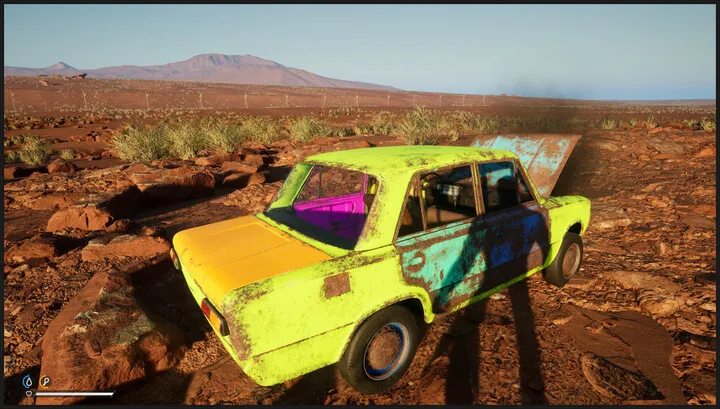
The DTS in Drive Beyond Horizons is one of the most sophisticated physics engines in modern gaming. It calculates friction coefficients for over thirty different surface types, from sun-baked asphalt to loose volcanic scree. To navigate these effectively, you must learn to "read" the road texture. The visual feedback of the gravel’s color or the asphalt’s sheen provides critical data on available grip. High-level players don't just react to a slide; they anticipate it by observing the transition zones between different terrain types and pre-adjusting their throttle input to maintain a "slip angle" that maximizes forward momentum without losing lateral control.
Advanced traction control involves more than just a menu toggle. The game allows for "On-the-Fly" (OTF) mapping, where you can adjust the sensitivity of the traction control system while driving. On a long, straight desert highway, you should lower the DTS intervention to reduce mechanical drag and increase top speed. However, as you approach the "Dust Storm" biomes, increasing the intervention is necessary to prevent the wheels from spinning out on the sudden layer of silt. Understanding the relationship between torque delivery and surface resistance is what allows a driver to maintain a consistent average speed regardless of the environment.
Surface Strategy List
- Glazed Tarmac: High heat increases stickiness but accelerates tire wear. Use a smoother steering arc.
- Corrugated Dirt: Causes "harmonic vibration." Soften your dampers to keep the tires in contact with the ground.
- Wet Slate: Zero lateral grip. Utilize engine braking rather than traditional discs to avoid locking the wheels.
3. Aerodynamic Architecture: Tuning for the Thin Air
As you push further toward the horizons, the altitude changes significantly, affecting both engine combustion and aerodynamics. Drive Beyond Horizons accurately simulates air density; as you climb the "Sentinel Peaks," your downforce will decrease because there are fewer air molecules hitting your spoilers. This can lead to a terrifying phenomenon known as "High-Altitude Lift," where the car becomes light and unresponsive. To counter this, you must learn the art of "Active Aero" management—adjusting your wing angles at rest stops to compensate for the predicted altitude of the next leg of your journey.
Aerodynamics is a balance between downforce and drag. While a massive rear wing keeps you planted in the corners, it acts as a parachute on the salt flats, severely limiting your top speed. Advanced guides suggest a "Rake Adjustment" (tilting the front of the car lower than the back) to create a natural venturi effect under the chassis. This generates "clean" downforce with minimal drag. Mastering this allows you to maintain 300+ km/h in the lowlands while still having enough grip to take the mountain hairpins without flying off the cliffside.
4. The Thermodynamics of Speed: Brake and Engine Cooling
Heat is the silent killer in Drive Beyond Horizons. Every action—braking, accelerating, drifting—generates thermal energy that must be dissipated. "Brake Fade" is a realistic mechanic; if your rotors get too hot, your stopping distance increases exponentially. High-tier players utilize "Trail Braking" to distribute heat more evenly and avoid "hot-spotting" the pads. You must also manage your "Brake Duct" opening size. Too wide, and you increase drag; too narrow, and your brakes will melt during a technical descent.
The engine's cooling system is equally sensitive. In the "Volcanic Rim" zones, the ambient temperature can cause your oil to thin and your coolant to boil. You must monitor your "Air-to-Fuel Ratio" (AFR). Running the engine "rich" (more fuel) can actually help cool the cylinders, but it drastically reduces your fuel range. This constant trade-off between thermal safety and resource efficiency is the core of the game’s management layer. Learning to coast in neutral during downhill stretches to let the engine temp drop is a mandatory skill for long-distance survival.
5. Gear Ratio Mathematics: Optimizing Torque for Variable Terrains
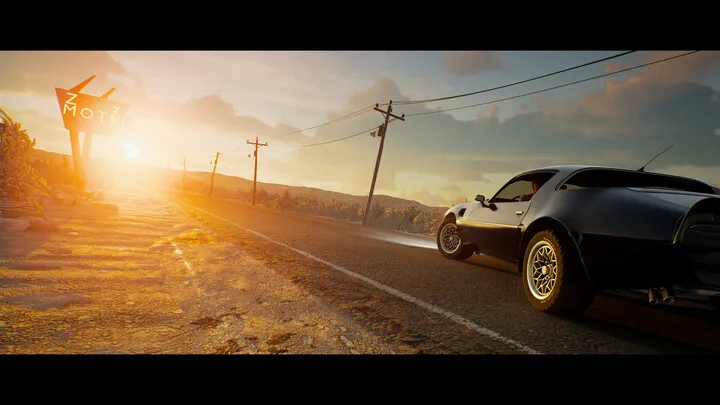
Drive Beyond Horizons allows for full customization of individual gear ratios, a feature often overlooked by casual players. A "Universal" gear setup is a recipe for mediocrity. For the "Endless Plains" sectors, you want a "Long" final drive ratio to maximize fuel economy and top speed. However, in the "Basalt Canyons," where acceleration out of tight corners is paramount, "Short" ratios are necessary to keep the engine in its "Power Band."
Gear Tuning Rationale
- First Gear: Set for high torque to overcome static friction on steep inclines.
- Intermediate Gears (2-5): Spaced closely to minimize RPM drop during shifting, ensuring the turbocharger stays spooled.
- Sixth/Seventh Gear (Overdrive): Set extremely long for "Cruise Mode" to save fuel during non-competitive legs.
If your gears are poorly tuned, you will find yourself "hunting" for the right gear—shifting up and down repeatedly because the engine can’t find the right torque for the current incline. This wastes time, burns fuel, and wears out the transmission.
6. The Navigator’s Mindset: Reading the Procedural Horizon
Navigation in this game is not as simple as following a GPS line. The procedural nature of the map means that landmarks can shift, and weather patterns can block traditional routes. A master driver is also a master navigator. You must learn to use the "Sextant Tool" and the topographical map to find the path of least resistance. Avoiding steep climbs saves fuel, even if the route is physically longer. This "Fuel-to-Distance" calculation is a constant mental exercise during the drive.
Weather prediction is the second half of navigation. Observing the cloud formations on the horizon can tell you if a rain front is moving in. Since rain affects the friction coefficient of every surface, knowing when to pull over and swap to "Intermediates" or "Wet" tires is a critical strategic decision. If you get caught in a monsoon with "Slicks," you will be stuck traveling at a crawl, or worse, hydroplaning into a total loss. Strategic foresight always trumps raw reflexes.
7. Tire Management: The Science of Rubber Degradation
Tire wear in Drive Beyond Horizons is calculated based on friction, temperature, and surface abrasiveness. You have three main compounds: Soft, Medium, and Hard. While Softs provide the most grip, they can "grain" and disintegrate in as little as fifty kilometers on hot asphalt. Hards are the workhorse of the game, capable of lasting through entire biomes, but they offer significantly less feedback and grip in the corners.
The "Tire Life Cycle" involves four stages:
- Cold Phase: Low grip, prone to sliding.
- Optimum Window: Peak performance, maximum feedback.
- Heat Cycle: Grips starts to drop, rubber begins to smear.
- End-of-Life: Structural failure risk, zero predictable handling.
Mastering tire management means staying in the "Optimum Window" for as long as possible by adjusting your driving style. If you notice your front-left tire is overheating in a clockwise circuit, you must alter your line to put less stress on that specific corner.
8. The Logistics of the Long Haul: Fuel and Weight Dynamics
Fuel is the literal lifeblood of your journey, but it comes with a heavy price: weight. A full tank of fuel in a large-capacity cruiser can add hundreds of kilograms to your vehicle, significantly altering its handling and braking distance. This creates a "Diminishing Returns" loop. If you carry too much fuel, you burn more fuel just to move the extra weight. If you carry too little, you risk being stranded between refueling outposts.
High-level players calculate their "Minimum Mission Fuel." This involves looking at the next sector's elevation gain and average speed requirements to determine the exact liter-count needed. By running a lighter car, you reduce tire wear and increase cornering speed. Furthermore, the position of the fuel tank affects the car's "Polar Moment of Inertia." As the tank empties, the car's balance shifts from rear-biased to neutral or front-biased. You must adapt your braking points as the car literally changes its physical profile over the course of the drive.
9. Night Operations: Sensory Deprivation and Visual Fatigue
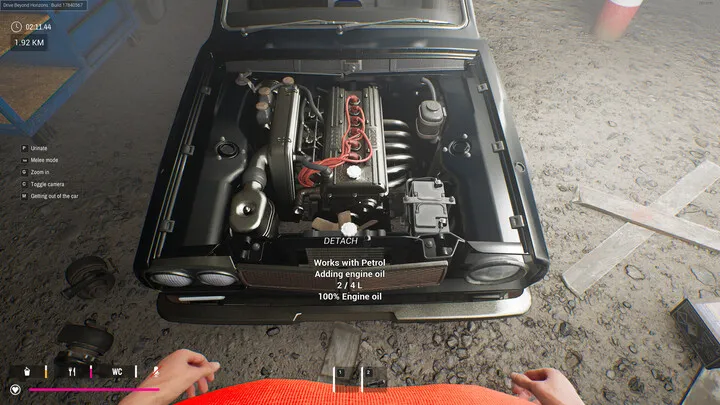
Driving at night in Drive Beyond Horizons is a transformational experience. The game utilizes a "True Dark" lighting system, where your only visual information comes from your headlights and the moonlight. This limits your "Depth Perception" and makes it impossible to see the road texture (and thus the friction data) at a distance. To compensate, you must rely on your "Auditory Feedback"—listening to the sound of the tires to hear when they are beginning to lose grip.
Light management is a technical skill. High-beam lights illuminate further but can create "Glare" during fog or dust storms, blinding you with reflected light. You must also manage your battery's electrical load; running auxiliary fog lights, interior gauges, and high-beams simultaneously can strain the alternator, leading to a loss of engine power or a total electrical failure. Night driving is about conservation and caution; the horizon is hidden, and the road becomes a game of memory and sound.
10. The Psychological Endurance of the 24-Hour Cycle
The ultimate challenge in Drive Beyond Horizons is the real-time endurance run. The game simulates driver fatigue through subtle visual and mechanical cues: your reaction time to prompts might slow, or the camera might "drift" slightly. To counter this, the player must manage their own real-world focus. Strategic "Pause Breaks" are built into the game's rest stop mechanics, allowing you to save progress and "refuel" the driver.
Endurance is about the "Micro-Adjustments." Over a six-hour session, the temptation is to become aggressive to finish faster. This leads to mistakes. The hallmark of a master is "Laminar Flow"—a state of driving where every input is smooth, every gear shift is perfect, and the speed is consistent. It is better to drive at 90% of your limit for ten hours than at 100% for one hour and crash. Respect the horizon, and it will eventually come to you.
Conclusion
Drive Beyond Horizons is a profound tribute to the art of the machine and the spirit of exploration. It is a game where the technical minutiae—the PSI in your tires, the rake of your chassis, the AFR of your cylinders—matter just as much as your ability to hold a line through a hairpin turn. By mastering the synergy between physics and planning, you transform from a mere driver into a true architect of the road. The horizons are infinite, and the path is yours to engineer. Drive with precision, manage with wisdom, and never stop looking beyond.