.webp) progamereviewh5.com
progamereviewh5.comHow to Master Frog Sqwad: A Complete Guide to Surviving the Sewers
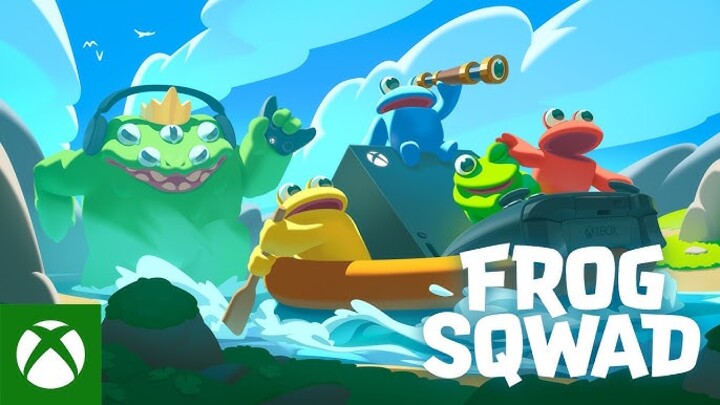
Frog Sqwad is a chaotic cooperative game where players take control of frogs and enter dangerous sewer environments to collect food, solve physics-based challenges, survive unexpected hazards, and return safely to the Swamp. The game becomes especially entertaining when played with friends because every player can interact with objects, use their sticky tongue, move through the environment, and help the rest of the squad.
Although Frog Sqwad looks simple at first, completing successful runs requires more than simply moving around and collecting everything you see. Players need to understand movement, exploration, food management, teamwork, frog growth, rescue mechanics, extraction, and progression. A good strategy can turn a chaotic run into a successful expedition, while poor communication can quickly cause the entire squad to lose valuable progress.
This guide explains how to play Frog Sqwad effectively from the beginning of a run to the final return to the Swamp. Whether you are completely new to the game or looking for ways to improve your squad's performance, the following strategies can help you survive longer and complete objectives more consistently.
1. How to Prepare Your Frog Squad Before Entering the Sewers
The first step toward a successful Frog Sqwad run is preparation. Because the game is designed around cooperative gameplay, players should communicate before entering the Sewers instead of immediately running in different directions. A squad with a simple plan can collect resources much more efficiently than a group of players working independently.
You do not need strict character classes, but giving each player a temporary responsibility can make the early part of a run much easier. One player can focus on scouting, another can concentrate on carrying food, while other players help with environmental obstacles and keep track of the safest route back.
A useful team structure can include:
• A scout who explores unfamiliar areas.
• A carrier who focuses on transporting food.
• A support player who helps with physics puzzles.
• A navigator who remembers important routes.
• A rescue player who stays close enough to assist teammates.
The most important preparation is communication. Players should tell the squad when they discover valuable food, dangerous areas, alternative routes, or difficult obstacles. Short and clear communication is often more effective than everyone talking at once.
2. How to Learn Frog Sqwad Movement Before Exploring
Once the run begins, new players should spend some time learning the movement system. Frog Sqwad uses physics heavily, so movement does not always feel like a traditional platform game. Your frog's tongue is an important tool that can be used to interact with objects and move through the environment.
Before exploring dangerous areas, practice attaching your tongue to different surfaces. Experiment with swinging, changing direction, releasing at different moments, and using momentum to reach new locations. Understanding these mechanics early will make later exploration much easier.
Players should also learn how their movement affects teammates and nearby objects. Running or swinging around randomly can knock food away or interfere with another player's movement. Controlled movement is particularly important when the squad is carrying valuable resources.
The best approach is to think of movement as a sequence. Attach the tongue, build momentum, release at the right moment, land safely, and then choose the next point of movement. With practice, this process becomes much more natural.
3. How to Explore the Sewers Without Getting Lost
Exploration is one of the most important parts of Frog Sqwad. The Sewers contain different areas, obstacles, food, and hazards, so players should explore carefully rather than rushing forward without a plan.
A common beginner mistake is sending every player in a different direction. Although this can reveal more of the map quickly, it also makes it difficult to help teammates when something goes wrong. Keeping most of the squad relatively close together provides much better support.
Instead of trying to memorize every exact route, learn to recognize landmarks and important areas. Pay attention to distinctive rooms, pipes, obstacles, and pathways. These environmental clues can help you understand where you are when returning from a deeper section.
A simple exploration routine is to move forward in short stages. Explore a new area, collect nearby resources, identify a safe route, and then continue. This is safer than constantly moving deeper without knowing how to return.
Players should also communicate when discovering shortcuts. A route that saves several minutes during one expedition may become extremely valuable during future runs.
4. How to Collect Food Efficiently
Food is one of the most important resources in Frog Sqwad because the squad needs to bring enough back to satisfy the Swamp King's requirements. However, collecting food efficiently does not mean grabbing every piece immediately.
Players should consider the value of an item compared with the risk required to collect it. A food item located near the extraction route may be more valuable in practical terms than a larger item hidden deep inside a dangerous section.
Before collecting something, ask three basic questions.
How difficult is it to move?
How far is it from the extraction route?
How dangerous is the surrounding area?
These questions help the squad make better decisions. If an item requires several players to move through a dangerous area, the reward may not justify the risk.
Large food items can also require teamwork. One player might pull while another clears obstacles and a third player watches for hazards. Everyone should communicate before moving the object so that players do not accidentally pull in different directions.
The biggest mistake is greed. Seeing another food item does not automatically mean the squad should continue deeper into the Sewers. The main objective is to complete the required quota and return safely.
5. How to Use the Frog's Tongue Effectively
The sticky tongue is one of the most useful tools available to frogs in Frog Sqwad. It can help players move through the environment, interact with objects, and approach challenges from different angles.
New players often think of the tongue only as a movement mechanic. Experienced players can use it as a general-purpose tool for exploration and cooperation.
For example, a player can use the tongue to reach elevated areas, pull objects, stabilize items, or assist another frog. During environmental challenges, players should experiment with different ways of interacting with the surroundings rather than assuming there is only one correct solution.
The physics system rewards creativity. If an object appears movable, try pulling it. If a route looks blocked, look for something that can be repositioned. If a teammate cannot reach an area, consider whether another player can help them.
Not every experiment will work, and that is part of the game's appeal. Failed attempts teach players how the environment reacts to movement, weight, momentum, and object placement.
The best squads gradually develop their own techniques for using the tongue. What initially feels unpredictable can eventually become a reliable movement and puzzle-solving tool.
6. How to Solve Physics Puzzles With Your Team
Frog Sqwad's physics-based challenges are much easier when players work together. Instead of having everyone interact with an object randomly, first identify what the squad needs to accomplish.
The objective might involve moving an object, opening a route, transporting food, reaching a higher location, or creating enough space for another player to pass.
Once the objective is clear, inspect the environment carefully. Look for movable objects, pipes, platforms, food, and alternative routes. Sometimes the obvious solution is not the most effective one.
A simple puzzle-solving method is to follow four steps.
First, identify the objective.
Second, inspect the surrounding environment.
Third, assign a specific action to each player.
Fourth, test the plan and adjust it if necessary.
Communication is especially important during physics puzzles. If two players are pulling an object in opposite directions, the situation can become more difficult. A simple countdown or clear instruction can help synchronize everyone's actions.
Players should also avoid assuming that a failed attempt means the puzzle is impossible. Frog Sqwad encourages experimentation, so changing the angle, position, or number of players involved can produce a completely different result.
7. How to Manage Frog Size and Food Consumption
One of the most interesting mechanics in Frog Sqwad is the way frogs can grow by eating food. Players can eventually become enormous Megafrogs, changing the way they interact with the environment.
Growing larger can be fun and useful, but players should think about their surroundings before consuming everything available. A large frog may have advantages in open areas, while narrow passages can become more difficult to navigate.
This creates an interesting decision during exploration. If the squad is already close to the extraction route and has plenty of room to move, additional food may be easy to consume. If the squad still needs to pass through tight areas, uncontrolled growth may make movement more complicated.
Players should therefore consider the timing of food consumption.
Another important mechanic occurs when a frog takes a hit. Losing food can cause the frog to shrink into a tiny frogspawn, creating an opportunity for teammates to help the player recover.
This makes teamwork important even after mistakes. Instead of abandoning a player who has lost their progress, the squad can coordinate a recovery attempt while other players continue protecting the remaining food.
8. How to Survive Mistakes and Rescue Teammates
Mistakes are inevitable in Frog Sqwad. Because the game relies heavily on physics, players can accidentally fall, lose food, become separated, or send themselves flying in an unexpected direction.
The key is learning how to respond quickly without turning one mistake into a squad-wide disaster.
If a teammate gets into trouble, first determine whether they can recover on their own. If they need help, one nearby player should assist them while the rest of the squad continues protecting the objective.
A useful rescue priority is simple.
First, check whether the player can recover independently.
Second, send one nearby teammate to help.
Third, secure valuable food from immediate danger.
Fourth, decide whether continuing the run is still worthwhile.
The biggest rescue mistake is having the entire squad rush toward one player. Five frogs attempting to solve the same problem can create even more chaos because of the game's physics.
Good teamwork means knowing when to help and when to continue. A controlled rescue is usually much more effective than everyone abandoning their responsibilities.
9. How to Return to the Swamp and Complete the Objective
Every successful expedition eventually needs to become an extraction. One of the most important skills in Frog Sqwad is recognizing when it is time to stop exploring and return to the Swamp.
Many failed runs happen because players continue searching for additional food after already collecting enough resources. The temptation to find one more valuable item can result in losing everything already collected.
Once the squad believes it has enough food, everyone should regroup. Players should confirm the direction of the return route and stop unnecessary exploration.
The extraction process should follow a simple routine.
Confirm that enough food has been collected.
Regroup separated players.
Move valuable food toward the safest route.
Avoid unnecessary risks.
Keep communication active.
Return to the Swamp.
The return journey should usually be treated as a separate phase of the run. The goal is no longer exploration. The goal is protecting what the squad has already earned.
This change in mindset is extremely important. Players should become more conservative during extraction because losing a large amount of collected food near the end of a run can be much more frustrating than collecting less food in the first place.
10. How to Use Gold and Improve Future Runs
After successful expeditions, players can use Gold to obtain toys and gadgets that can influence future runs. This creates a progression system where the rewards from previous expeditions can help the squad become more effective over time.
Instead of spending Gold randomly, players should identify the problems that repeatedly cause their squad to fail.
If navigation is the main problem, prioritize improvements that make exploration easier. If physics challenges cause problems, consider equipment that helps the squad interact with the environment. If the team repeatedly loses food during extraction, focus on improving the overall strategy rather than simply collecting more.
A useful long-term progression cycle is simple.
Enter the Sewers with a plan.
Explore carefully.
Collect valuable food.
Use the tongue creatively.
Work together during physics challenges.
Rescue teammates when necessary.
Return before the situation becomes too dangerous.
Complete the Swamp King's requirements.
Spend Gold on useful upgrades.
Repeat the process with better coordination.
The more the squad plays together, the more naturally these decisions become. Players begin to understand how their friends move, which person is best at scouting, who handles physics puzzles well, and who can navigate the return route reliably.