





The Architect’s Blueprint: Mastering the High-Level Macro and Micro of League of Legends
League of Legends is often described as a game of inches, where the difference between a Challenger-tier player and a Silver-tier player lies not just in mechanical execution, but in the internal processing of hidden variables. To truly master Summoner’s Rift, one must move beyond the basic understanding of "killing the nexus" and begin to view the game as a series of cascading mathematical advantages and psychological pressures. This guide is designed to dissect the high-level strategies that define modern League of Legends, focusing on the nuanced "How-To" of wave management, jungle pathing, and the invisible art of objective priority.
Success in the current meta requires a synthesis of individual micro-skill and collective macro-logic. It is no longer enough to win your lane; you must understand how to translate a 15-gold lead into a global map pressure that suffocates the enemy team. In the following chapters, we will explore the technical depth of the game, moving from the first 1:30 minutes of the match to the final, game-ending siege, providing a definitive manual for those looking to ascend the competitive ladder.
1. The Pre-Game Stratagem: Drafting and Loadout Optimization

Mastering the game begins in the Champion Select screen. A common mistake among climbing players is focusing solely on "counter-picking" their lane opponent while ignoring team composition synergy. A high-level player evaluates the "Win Condition" of the draft. Does your team rely on a 1-3-1 split push, or are you a 5-5 "Wombat Combo" team that needs to force fights at objectives? Understanding the identity of your team allows you to adjust your Runes and Summoner Spells—not just for your lane, but for the late-game teamfights.
Beyond the champions, the optimization of the "Adaptive Force" and "Resistances" in your rune shards can decide the first three levels of the game. For example, taking two armor shards against a heavy AD poke champion like Pantheon can be the difference between staying in lane to reach Level 6 or being forced into a disastrous early recall. You must treat your loadout as the first tactical maneuver in a long-form chess match, ensuring your stats align with the specific timing of your champion's power spikes.
2. Early-Game Micro: The Art of Wave Manipulation
Wave management is the most powerful tool in a laner’s arsenal, yet it remains the most misunderstood. The ability to "Slow Push," "Fast Push," or "Freeze" a wave dictates the flow of the entire map. A Slow Push—achieved by only last-hitting while having a slight minion advantage—creates a massive wave that forces the enemy to stay under their turret. This "Crash" provides you with a "Tempo Reset," allowing you to roam into the river, secure a ward, or assist your jungler in an invade without losing any experience or gold.
Conversely, "Freezing" is a defensive maneuver used to starve the enemy. By holding the minion line just outside your own turret range, you force the opponent to step deep into your half of the map, leaving them vulnerable to ganks. To master the freeze, you must maintain a "plus-four" minion advantage for the enemy (four more enemy casters than yours). This creates a permanent stalemate that can effectively remove an opponent from the game by denying them the ability to farm safely.
Essential Wave States
- The Cheater Recall: Crashing a large wave on the third or fourth turn to get an early item advantage (like a Cull or Dark Seal) while the enemy is stuck farming under tower.
- The Dive Setup: Building a massive wave to tank the turret shots while you and your jungler execute a 2v1 or 3v2 kill.
- The Bounce-Back: Recognizing when the wave will naturally push back to you so you can safely bait the enemy into overextending.
3. Jungle Pathing: Tracking and Vertical Jungling
The jungle role is the "Architect of Momentum." High-level pathing is no longer about clearing camps in a circle; it is about "Information Negation." By starting on an unconventional side or using "Vertical Jungling"—where you concede your own bot-side jungle to take the enemy’s top-side—you create a map state where the enemy jungler cannot predict your location. This psychological fog prevents enemy laners from playing aggressively, as the threat of your presence is felt everywhere.
Tracking the enemy jungler is a skill of deduction. By checking the enemy jungler's CS (Creep Score) when they first appear, you can determine exactly which camps they cleared. Every camp in League of Legends is worth 4 CS. If a jungler appears with 24 CS and a Red Buff, you know they have cleared exactly six camps. This information allows your team to play with "Perfect Knowledge," knowing exactly which side of the map is safe and which side is under threat for the next 2:30 minutes.
4. The Mid-Game Transition: Vision Control and Neutral Objectives
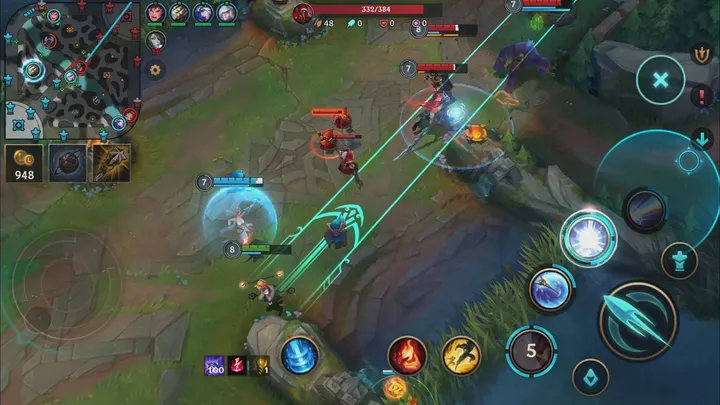
The transition from laning phase to mid-game is where most games are lost. The "Rule of 20" (the 20-minute mark when Baron Nashor spawns) shifts the priority from gold accumulation to "Vision Dominance." Controlling the "Rift Geometry"—the corridors leading to Dragon and Baron—is more important than the objective itself. You should never start a major objective unless you have cleared the "Dark Zones" around it.
Vision Priority Tiers
- Deep Wards: Placed at enemy jungle buffs to track rotations.
- Control Wards: Used to "Black Out" enemy vision in the river pits.
- Defensive Wards: Placed at your own jungle entrances when playing from behind to prevent collapses.
Effective vision control requires "Synchronized Backing." If your support goes to ward alone, they are a free kill. The team must move as a unit to "sweep" the jungle, using blue trinkets and sweepers to create a safe path for the carries. This allows your team to "Brush Cheese"—sitting in an unwarded bush to catch a rotating enemy—which is the fastest way to turn a neutral game into a lopsided victory.
5. Objective Bounties and Comeback Mechanics
In the modern game, the "Objective Bounty" system has changed the way we handle a deficit. If your team is behind, your focus must shift from "Fighting" to "Stalling." Every fight you take while 5,000 gold down is a statistical mistake. Instead, you must utilize "Cross-Map Trading." If the enemy team takes the Dragon, you must be taking a Tier 2 Turret or a Rift Herald on the opposite side. This minimizes the net loss and keeps the gold gap bridgeable.
Managing the Bounty State
- Avoid ARAMing: Do not sit in the mid-lane with four teammates; this splits XP and gold too thinly.
- Priority on Bounties: When a bounty is active on a turret, the team should sacrifice a minor objective (like a single cloud drake) to secure the massive injection of gold from the turret.
- The "Stop-Watch" Economy: Using stasis items to delay fights and force the enemy to over-commit for a kill that pays out less than the time they lost.
6. Advanced Teamfighting: Spacing and Target Selection
Teamfighting in League of Legends is a high-speed exercise in "Priority Sequencing." You must understand the "Threat Hierarchy." It is not always correct to focus the enemy ADC. If the enemy has a 10/0 Yone, he is the only target that matters. High-level teamfighting relies on "Front-to-Back" or "Dive" logic. A Front-to-Back team (like those with Ornn or Jinx) needs to kill the enemy frontline first while maintaining a "Kiting Triangle."
"Spacing" is the micro-skill of staying exactly one pixel outside the enemy’s effective range. For an ADC, this means tracking the cooldowns of the enemy's "Flash-Engage" abilities (like Malphite R or Alistar combo). Once those cooldowns are spent, the "Window of Aggression" opens. This is where you move forward. If you move forward before the key cooldowns are used, you are "Inting." Patience is the most lethal weapon in a teamfight.
7. The Siege and the Split Push: Macro Pressure
Late-game victory is often achieved through "Asymmetrical Pressure." The Split Push is the most effective way to break a stalemate. A champion with high dueling potential and "Hullbreaker" logic (like Fiora or Jax) stays in a side lane, forcing the enemy to send two or more people to stop them. This creates a "Power Play" on the other side of the map, allowing the remaining four teammates to take Baron or a Turret with a numerical advantage.
Effective split pushing requires "Rhythmic Awareness." You must only push past the river when your team is also pressuring another objective. If you push into the enemy's Tier 3 turret while your team is backing to buy items, you are simply giving away a free kill. You and your team must move in tandem, like two pistons in an engine, creating a constant choice for the enemy: lose the base or lose the Baron.
8. Itemization: Adaptive Building and Power Spikes
Static builds are a relic of the past. To win consistently, you must build for the "Damage Profile" of the enemy. If the enemy has three healing champions (like Aatrox, Sylas, and Soraka), "Grievous Wounds" must be purchased by the 15-minute mark, not the 30-minute mark. Furthermore, understanding "Power Spike Items" (like Infinity Edge, Liandry’s Torment, or Trinity Force) tells you when you are allowed to force a game-ending fight.
High-Level Item Logic
- Penetration vs. Raw AP/AD: If the enemy has more than 100 Armor/MR, Void Staff or Lord Dominik’s Regards is more damage than a Rabadon’s or Bloodthirster.
- Active Items: Mastering the use of Zhonya’s Hourglass, Quicksilver Sash, and Redemption is often the difference between a Platinum and a Diamond player.
- Utility for Carries: Sometimes an ADC needs a Guardian Angel or a Wit’s End to survive a burst assassin. A dead carry deals zero damage.
9. The Mental Game: Tilt Proofing and Communication
League of Legends is as much a psychological battle as it is a physical one. "Tilt" is a physiological state where your brain shifts from the prefrontal cortex (logic) to the amygdala (emotion). When this happens, you lose the ability to track the map and manage waves. Mastering the "Mute All" function is a legitimate competitive strategy. High-level players communicate via "Pings"—efficient, non-emotional data points that don't invite toxic arguments.
Focus on "The Next Play." Ruminating on a missed Smite or a failed Flash only ensures that your next play will also be a failure. The game state is constantly resetting. Every 30 seconds, a new wave spawns, and a new opportunity for a comeback arises. Maintaining a "Process-Oriented" mindset rather than a "Result-Oriented" one is the hallmark of the most successful players in the world.
10. The End Game: Closing Out and the Final Siege
Closing out a game requires "Disciplined Aggression." Many teams throw their lead by diving a Tier 3 turret without a minion wave or a Baron buff. The "Baron Siege" is a specific technical maneuver. You should use a 4-1 or 1-3-1 formation to chip away at all three inhibitors simultaneously. Breaking all three inhibitors creates "Super Minion Pressure" that effectively wins the game, as the enemy can no longer leave their base to contest Elder Dragon.
When the Nexus is exposed, do not "BM" (Bad Manners) or chase for kills. The only objective is the Nexus. In the late game, death timers are 50-70 seconds long; a single mistake during the final siege can lead to the enemy running down the mid-lane and winning the game off a single "Aced" screen. Respect the respawn timers, respect the enemy's "Homeguard" speed boost, and execute the final structures with clinical precision.
Conclusion
League of Legends is a magnificent, frustrating, and incredibly deep ecosystem that rewards those who treat it as a craft. By mastering the micro-physics of wave manipulation, the macro-logic of jungle tracking, and the psychological discipline of the mid-game, you elevate yourself above the chaos of solo-queue. There is no "secret trick" to winning; there is only the consistent application of high-level principles over thousands of clicks. Summonser's Rift is a mirror of your own discipline—the more you refine your process, the more the horizon of victory expands. Now, take these blueprints and build your path to the top of the ladder.