.webp)



Getting Started: Installation and Initial Setup
The first step to engaging in the unique economic phenomenon of Banana is simply getting the game and understanding its core premise. The barrier to entry is extremely low, making it accessible to virtually anyone.
H3: Step 1: Install the Game
- Locate the Game: Search for Banana on the primary PC digital storefront where it is hosted.
- Install: Add the game to your library and complete the installation process. The file size is typically very small.
- Launch: Once installed, launch the application.
H3: Step 2: Understand the Interface
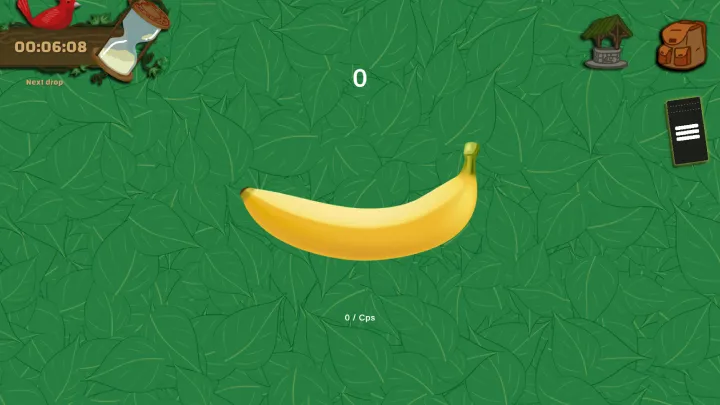
Upon launching the game, you will be greeted by a minimalist interface. The key elements are:
- The Banana: The large, static image at the center of the screen. This is your target.
- The Counter/Timer: While not always explicitly displayed, the game internally tracks when you are eligible for your next drop.
Crucial Rule: The game requires minimal active play. Your primary engagement is the timed click and managing your inventory through the marketplace.
Mastering the Drop Timer: Maximizing Your Daily Yield
Your success in Banana is directly proportional to the number of drops you acquire, as each drop is a chance to receive a high-value, rare item. Mastering the timer is the most crucial mechanical skill.
H3: Step 3: Learn the Drop Cycles
The game operates on two main timing protocols for item acquisition:
- The Three-Hour Cycle (Primary Click): You are eligible to receive a new item every three hours after your last successful click. This is the optimal window.
- Action: When the three hours are up, simply click the banana image. A notification will confirm you have received a new item, and the timer will restart.
- Goal: Aim to hit the three-hour cycle as many times as possible in a 24-hour period (up to eight times) to maximize your chances of rolling a rare item.
- The Eighteen-Hour Cycle (Safety Net): If you miss multiple three-hour cycles (e.g., while sleeping or away from the computer), the game guarantees you a new drop at least once every eighteen hours.
- Action: Click the banana image when the eighteen-hour window is open.
- Goal: Use this as a fallback. Never rely on the eighteen-hour cycle for maximum profit; it is there to ensure inventory growth even during long periods of inactivity.
Actionable Tip: Use an external alarm, reminder app, or your phone's clock to set a recurring three-hour notification. Consistency is key to volume.
H3: Step 4: Check Your Inventory
After each click, the item is automatically added to your game inventory, which is visible through the main platform’s interface.
- Identify the Item: Check the name and image of the item received.
- Determine Rarity: Most drops will be a Common Banana. Note the appearance of any named variants (e.g., Pixel Banana, Glitch Banana), as these are your valuable rare items.
The Economic Engine: Utilizing the Marketplace
The real "game" is the player-driven economy. All items acquired through drops are tradable on the integrated marketplace for real-world currency.
H3: Step 5: Understand Item Value and Rarity
The price of any Banana item is determined by two factors: Scarcity and Community Demand.
- Common Bananas: These are sold in high volume for the market floor price (usually fractions of a cent). They are used for generating quick liquidity.
- Rare/Unique Variants: These are the high-value items. Their price is directly tied to their drop rate (the lower the drop rate, the higher the price) and their aesthetic appeal to collectors. Always check the current market price for your specific variant before listing.
H3: Step 6: Decide Your Trading Strategy
You have two main paths to profit: Volume or Investment.
- Strategy A: Volume Selling (Liquidity):
- Action: List all Common Bananas you acquire daily at the current market floor price.
- Benefit: This provides a steady, albeit small, stream of cash flow, allowing you to quickly capitalize on any rare drops you may receive.
- Strategy B: Investment and Holding (High Value):
- Action: Immediately delist any Rare or Legendary variant you acquire and hold it in your inventory.
- Reasoning: As the player base grows, the circulating supply of older rare items remains fixed (or grows very slowly), often increasing their market value over time. Holding rare items is a long-term investment strategy.
H3: Step 7: Executing Market Buys (Flipping)
Experienced players often profit by trading items they never acquired through drops—a practice known as market flipping.
- Monitor Undercuts: Watch the market for players selling rare variants below the established average price (known as "undercutting"). This often happens when players hastily list an item without checking its true value.
- Buy Low: Purchase the undervalued item instantly.
- Relist High: Immediately relist the item at the established market price. This strategy is fast, but requires continuous market monitoring and existing liquidity.
Advanced Strategies and Update Anticipation
The continuous "updates" in Banana revolve around introducing new variants and adjusting the underlying drop mechanics. Knowing when and how to anticipate these changes is key to advanced success.
H3: Step 8: Prepare for New Variant Drops
Developers periodically announce the introduction of New Banana Variants. This is the most crucial time for economic activity.
- Increase Drop Rate: In the days leading up to the release, maximize your three-hour click cycle. The more clicks you execute, the higher your chance of acquiring the ultra-rare first-edition drops.
- Capitalize on Volatility: When a new ultra-rare item is released, its price is highly volatile. If you are one of the first to acquire it, you can often sell it immediately at an extremely high price to collectors who need to complete their set quickly.
H3: Step 9: Adapt to Scarcity Changes
While the core mechanics are static, developers may occasionally adjust the Drop Rate for existing items, making older items scarcer.
- Check Developer Announcements: Pay attention to official communications regarding rarity adjustments.
- Adjust Selling Strategy: If an older rare item is announced to be officially "Retired" (no longer dropping), its value will almost certainly spike due to permanent scarcity. This is the optimal time to sell that specific item for maximum profit.
By consistently adhering to the three-hour drop cycle and employing a disciplined strategy in the marketplace, you can effectively master the unique economic landscape of Banana.